

Jamie Tso
Funds lawyer in Hong Kong. Started automating fund doc reviews as a trainee in 2020 and mapping retail prospectuses against regulations. When generative AI hit, he built a lot of internal tools that saw widespread adoption globally. Wanting to show that lawyers can build, he recreated the core tabular review feature of platforms like Harvey and Legora in an afternoon, then kept vibe-coding legal tech tools. The demos racked up over 160K views and his open-source repos were forked over 100 times, inspiring more lawyers to build in public and bringing about a vibe-coding movement within the legal community. He has since been featured on multiple legal tech podcasts and founded LegalQuants, an invitation-only community for lawyers who code.
6 Projects
RedlineNow
Instant document redline comparison with AI-powered change summaries. Upload two versions of a document and instantly see a side-by-side comparison with highlighted changes and an AI-generated summary of what changed and why it matters.
Signature Packet IDE
AI-powered tool to extract and organize signature pages from transaction documents. Upload closing binders or transaction documents, and automatically extract signature pages organized by signatory. Perfect for M&A closings and fund formations.
Tabular Review
AI-powered document review workspace that transforms unstructured contracts into structured datasets. Upload contracts and automatically extract key terms, dates, and obligations into a searchable, sortable table format. Ideal for due diligence and portfolio review.
ChartAI
AI-powered corporate structure visualization tool. Upload corporate documents and automatically generate interactive org charts showing ownership structures, subsidiaries, and relationships.
Redline Agent
AI agent that autonomously redlines contracts. Give it natural language instructions describing your negotiation position, and it produces a fully marked-up document with tracked changes — no manual editing required.
Contract Simulator
Bring contracts to life by spawning AI personas for each party. Simulate how agreements behave under different scenarios — stress-test clauses, roleplay negotiations, and surface hidden risks before signing.
Featured In
- Artificial Lawyer — Jamie Tso Interview: Vibe-Coding Your Own Legal AI Tools
An interview discussing his transition from trainee to builder, the economics of "build vs. buy," and why he believes sophisticated legal tools will eventually be free or open-source.
- GOLT TALK EP 41 — The Golden Era of Vibe Coding
Jamie joins host Tom Pfennig to discuss the "golden era of vibe coding" and how he recreates features from major platforms (like Harvey) using public information. They also explore the concept of "disposable software" and future teams of AI agents.
- Legal Tech Hobbyist 01 — The Lawyer’s Guide to Vibe Coding
In the inaugural episode of this series, Jamie discusses the mindset shift required for "vibe coding"—focusing on intent rather than language. He shares his journey from coding a clinic website to building legal tools like a "tabular review" feature and a contract simulator.
- Law://WhatsNext — Lawyer x AI Builder Jamie Tso
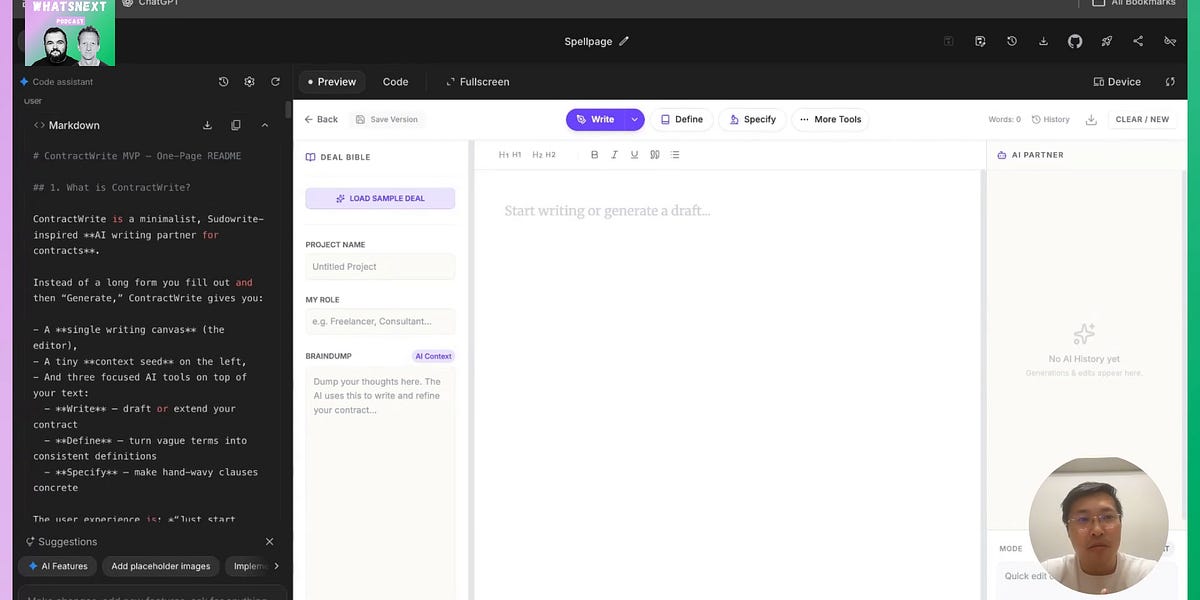
A live-coding demonstration of his "SpellPage" editor and a discussion on creating an open-source "legal AI operating system."
- Substack — The Jane Street of Law: The Rise of the Legal Quant
A manifesto on why law firms should adopt the "Jane Street" model, treating code as culture and lawyers as infrastructure builders.
- Substack — The Era of Vibe Coding: How to Get Started
A recap of his session with Washington University School of Law, detailing a 4-step framework for lawyers to build their own tools using Google AI Studio and Replit.
- Legal Innovation Spotlight EP 101 — The Rise of Lawyer-Built Tools and Vibe Coding
A deep dive into vibe coding for legal workflows — covering its prototyping power, its current limitations around scalability and security, and whether established legal AI platforms have a true moat when their core features can be replicated with foundation models.
Philosophy
“Technical talent in law should be a revenue line, not a support function”
Drawing parallels to Jane Street — a Legal Quant understands retrieval architectures, data provenance, and builds infrastructure to remove mechanical friction from legal work.
“Most legal tools don’t need to scale to a thousand users”
Vibe coding lets non-technical people build software by describing intent. The result is just-in-time, disposable software — tools built for specific pain points, not platform plays.
“Contracts should be simulated, not just read”
Use AI personas to roleplay each party and stress-test how agreements behave under different scenarios before signing. Move beyond static text analysis.